

From the “vintage” Scarsdale Diet to the latest viral nutrition trends, weight-loss plans have been making bold claims since time immemorial.
They almost always share the same seductive promise: shift the pounds without ever feeling hungry or breaking a sweat.
However, regardless of the specific method you choose to reach your target weight, nutritionists are clear on one non-negotiable point: any eating plan must be built upon a healthy, sustainable foundation that does not involve the total restriction of any major food group.
So essentially, the real secret to success isn’t just about what you eat, but how you live.
If you equip yourself with the right tools to maintain good habits, the dreaded “yo-yo effect” – that frustrating cycle of weight loss followed by immediate gain – is finally removed from the equation.
To help you stay the course, here are five expert-led strategies designed to help you avoid throwing in the towel. From the art of the “weekly prep” to managing emotional hunger and setting realistic milestones, here is how to achieve a healthier you for the long term.
“Whether it is planning your weekly meals or committing yourself to a daily brisk walk, the mantra should always be: ‘Done is better than perfect'”
 © JLco – Ana Suanes
Commitments don’t have to be big – it could be as simple as ‘take the stairs’ or ‘eat a salad’
Set SMART and realistic goals
Psychologist Beatriz Gil Bóveda reveals her first piece of professional advice for navigating a weight-loss journey successfully: “Define ‘SMART’ goals (objectives which are Specific, Measurable, Achievable, Relevant and Time-bound) to stay focused and motivated,” she says. Instead of a vague resolution like “I want to get fit,” try a goal like “I will walk for 30 minutes four times a week for the next month.”
The mental health expert suggests that you “start with small, progressive changes” rather than an overnight overhaul of your entire life. “Whether it is planning your weekly meals or committing yourself to a daily brisk walk, the mantra should always be: ‘Done is better than perfect.'” Small wins build the momentum for big results.
 © Getty Images
Meal prep saves you time, energy and money – and also can keep you from snacking or ordering takeaway
The power of planning
Thinking ahead is perhaps the most effective weapon in your arsenal. The practice of meal prep and “batch cooking” – spending one day a week preparing the bulk of your meals – is a system lauded by experts for good reason.
When you have a nutritious, home-cooked meal ready to go in the fridge, you are far less likely to succumb to the temptation of a high-calorie takeaway or a sugary snack when you’re tired after work.
Gil Bóveda highlights planning as the ultimate secret to success: “Dedicate a specific moment each week to organise your meals, activities and even your rest periods. Using a calendar with dedicated blocks for cooking, working, and exercising helps maintain a stable routine and eliminates the stress of improvising.”
 © Getty Images
Deep breathing before eating a meal helps get your gastric juices and enzymes flowing
Master your stress management
Our internal chemistry plays a massive role in weight loss. Food technologist and nutrition specialist Irene Domínguez explains: “Stress triggers the sympathetic nervous system, which inhibits digestion.
“Because the body perceives digestive functions as ‘non-priority’, the secretion of digestive enzymes is reduced, leading to discomfort and bloating.”
If you often feel heavy or bloated after eating, Domínguez offers a simple, transformative trick: “Try practising deep breathing exercises just before you start your meal. By doing this, you activate the vagus nerve, which connects the brain to the digestive organs.
“This stimulates the parasympathetic nervous system – the ‘rest and digest’ mode – improving the secretion of gastric juices and enzymes. You will find yourself feeling much lighter and calmer after you eat.”
 © Getty Images
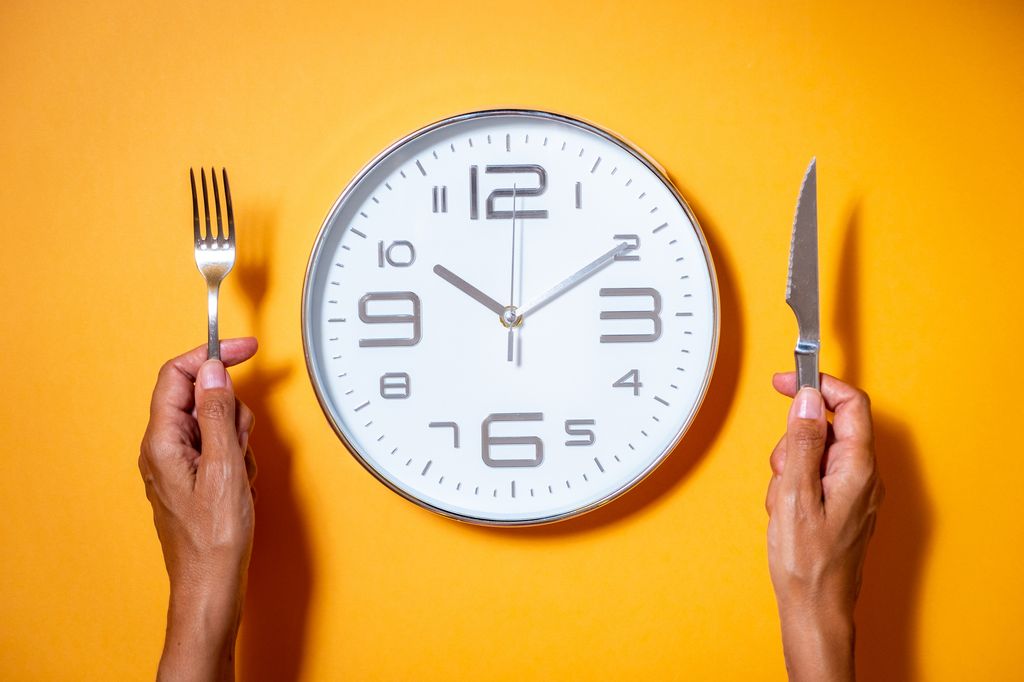
There’s actually scientific reasoning behind the trending celebrity technique
Embrace intermittent fasting (but with flexibility)
Intermittent fasting has been talked about by celebrities like Chris Hemsworth and Gisele Bündchen, and Domínguez recommends incorporating it if your schedule allows. “On the days you can – and keeping things completely flexible – consider fasting for 16 hours between dinner and breakfast the following day.
“If you find that a bit of a struggle, go for the easier option and aim for at least 12 hours. It’s far simpler to manage and still offers significant benefits, such as improving insulin sensitivity, reducing inflammation and preventing bloating.”
 © Getty
Eating a healthy salad, completing a full day of your new routine, or simply mastering a new recipe are all reasons to celebrate
Celebrate every victory
Positive reinforcement is essential for long-term psychological success. Psychologist Gil Bóveda suggests that we are often too hard on ourselves, focusing only on the end goal rather than the journey. “Acknowledge your progress, no matter how small it might seem,” she says.
“Prepping a healthy meal or simply sticking to your routine for a full day is a real achievement in itself. These moments of self-recognition help to bolster your motivation and keep you moving forward.”
About the experts:
- Beatriz Gil Bóveda is a psychologist, CEO of Psique Cambio and mental health podcaster; she has also collaborated with HelloFresh.
- Irene Domínguez is a Food Technologist and Head of Nutrition at Spain’s Palasiet Wellness Clinic.
