Use the checklist below as a reflection tool — not a rulebook. No teacher supports every learning style equally in every class. The goal is range, not perfection.
Visual / Spatial Learners
“I need to see it.”
You’re supporting visual learners when you:
- Demonstrate key poses
- Ask experienced students to demo when appropriate
- Use visual imagery (“reach like light,” “spiral upward”)
- Face the room when introducing new shapes
- Offer mirror-style demonstrations for beginners
Verbal / Linguistic Learners
“I need clear words.”
You’re supporting verbal learners when you:
- Use clear, consistent language
- Explain both what to do and why
- Introduce anatomy gradually
- Slow your speech for new actions
- Repeat essential cues without rushing
Bodily / Kinesthetic Learners
“I need to feel it.”
You’re supporting kinesthetic learners when you:
- Allow time to explore within poses
- Encourage self-touch cues (“place a hand on your ribs”)
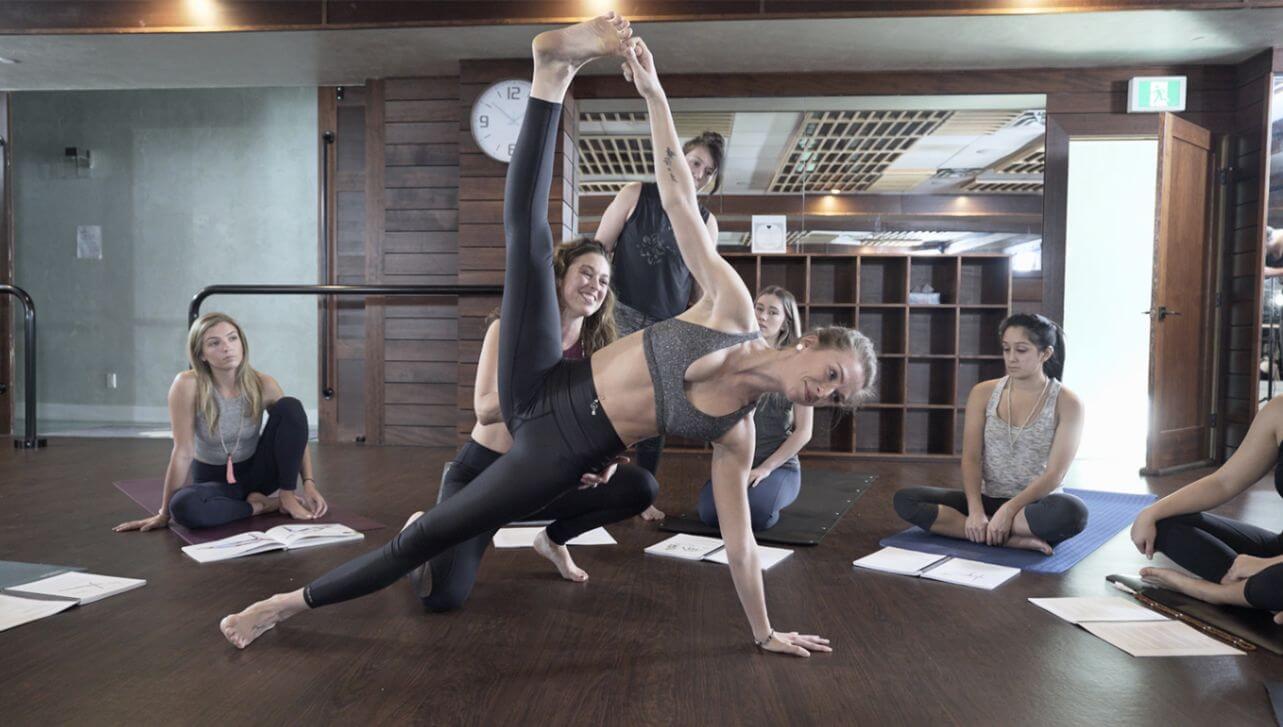
- Offer appropriate hands-on assists
- Invite micro-movements for sensing alignment
- Teach sensation rather than shape alone
Musical / Rhythmic Learners
“I learn through rhythm.”
You’re supporting rhythmic learners when you:
- Cue movement with breath
- Emphasize inhale/exhale pacing
- Use music intentionally (or intentionally not)
- Maintain a steady vocal tone
- Reduce distracting or abrupt sounds
Interpersonal Learners
“I learn through connection.”
You’re supporting interpersonal learners when you:
- Make eye contact
- Learn and use student names
- Invite brief check-ins
- Acknowledge effort and presence
- Create a welcoming, relational class culture
Intrapersonal Learners
“I learn by going inward.”
You’re supporting intrapersonal learners when you:
- Offer quiet moments for self-observation
- Normalize rest and personal variations
- Encourage autonomy in poses
- Allow non-linear participation
- Invite reflection, intention-setting, or journaling
