
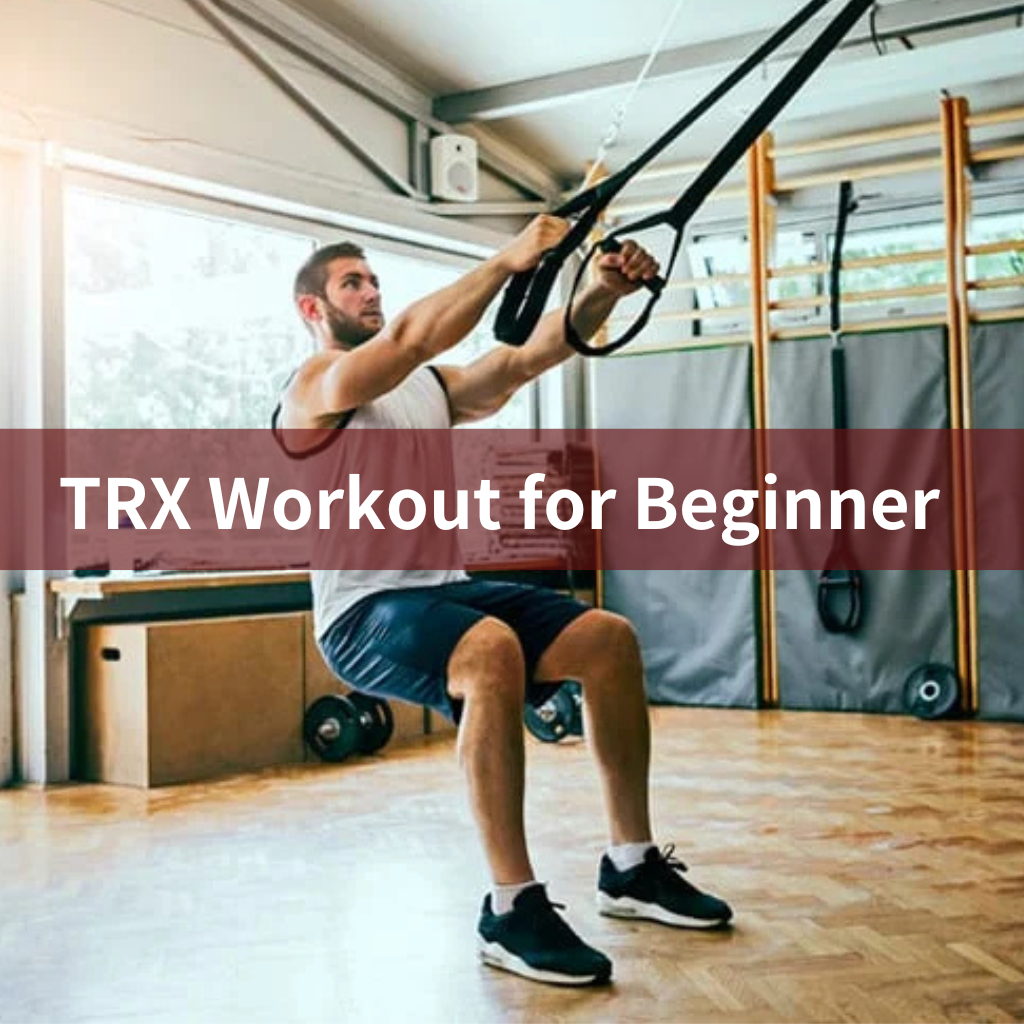
You’ve seen those yellow and black straps hanging in gyms. Perhaps you’ve watched YouTube videos of people performing crazy exercises while suspended in mid-air. You’re intrigued, but also slightly intimidated.
Welcome to the world of TRX suspension training.
Here’s the truth: TRX appears to be way more complicated than it actually is. Those straps are one of the most versatile, effective, and beginner-friendly pieces of home workout equipment you can own.
You can train your entire body with just two straps and a door anchor. No weights needed. No complicated setup. Just you, gravity, and those magical yellow straps.
I’m going to show you exactly how to use TRX as a complete beginner, which exercises to start with, and how to build a workout that actually gets results—all from the comfort of your home.
What Is TRX Suspension Training?
TRX stands for Total Resistance eXercise. A former Navy SEAL created it using parachute webbing because he needed a way to stay fit while deployed with minimal equipment.
The concept is brilliantly simple: you use adjustable straps anchored to a stable point (door, tree, beam) to perform bodyweight exercises. By changing your body angle, you can make exercises easier or harder instantly.
Why TRX works so well:
- Every exercise engages your core for stability
- You can adjust the difficulty in seconds by moving your feet
- It’s portable (fits in a bag, weighs about a pound)
- Low impact on joints compared to weights
- Builds functional, real-world strength
- Perfect for small home spaces
The best part? You control the intensity entirely. Beginners and advanced athletes can use the same straps and get an equally challenging workout.
What You’ll Need to Get Started
Let’s talk equipment. Fortunately, the list is short.

Essential:
- TRX suspension trainer or quality knock-off (genuine TRX runs $150-200, alternatives cost $30-80)
- Door anchor (usually included with the straps)
- Sturdy door that closes securely
- Small amount of floor space
Optional but helpful:
- Yoga mat (for comfort on floor exercises)
- Athletic shoes with a good grip
- Water bottle
- Towel
Buying tip: If you’re on a budget, cheaper suspension trainers work fine for beginners. The TRX brand has better handles and smoother adjustment, but a $40 set will get you started. You can always upgrade later.
How to Set Up Your TRX Safely
Before you do a single exercise, you need to know how to anchor those straps properly. An improper setup can ruin your workout or worse—cause injury.
Door Anchor Setup (Most Common for Home Use)
Step 1: Close your door and make sure it opens AWAY from where you’ll be exercising. This is critical. The anchor needs to be on the hinge side of the door.
Step 2: Thread the door anchor (the flat piece with a nub) over the top of your door so the nub hangs on the hinge side.
Step 3: Close the door firmly. The nub should be trapped between the door and the frame. Give it a hard tug to make sure it’s secure.
Step 4: Clip or loop your TRX straps through the door anchor loop.
Step 5: Pull hard on the straps to test the anchor before every workout. If the door budges even slightly, find a different door.
Safety check: Stand facing away from the door and pull hard on the straps at different angles. The door shouldn’t move at all.
Understanding Strap Length Positions

TRX has three main length settings you’ll use:
Fully shortened (straps bunched up at anchor point): For exercises where you want handles close to the anchor, like tricep presses or single-leg squats.
Mid-length (straps hang to about waist height): For most standing exercises like rows, chest presses, and squats.
Fully lengthened (straps hang to about ankle height): For exercises where your feet go in the straps, like hamstring curls or pikes.
You’ll adjust constantly during workouts. That’s normal.
The Beginner’s Body Position Rule
Here’s the secret to making TRX work for you as a beginner: your body angle determines difficulty.

More upright = easier. More horizontal = harder
When you do a TRX row standing nearly upright, it’s easy. Walk your feet forward so your body is more horizontal, and suddenly it’s brutally hard.
This is your superpower. You can’t fail a rep on TRX—you just adjust your feet and keep going. No need to change weights or grab different dumbbells.
As you get stronger, simply walk your feet forward (or backward, depending on the exercise) to increase the challenge.
Your First TRX Workout (Complete Beginner Full-Body Routine)
Alright, let’s build your first workout. This routine hits everything—chest, back, legs, core, arms. It takes 30-40 minutes, and you’ll do it 2-3 times per week.
Warm-Up (5 minutes)
Don’t skip this. TRX engages your stabilizer muscles intensely, and cold muscles + stability challenge = potential injury.
Do this:
- Arm circles: 20 forward, 20 backward
- Bodyweight squats: 15 reps
- Walking in place: 2 minutes
- Hip circles: 10 each direction
TRX practice holds: Hold the handles and lean back slightly for 20 seconds to get comfortable
Exercise 1: TRX Chest Press (Main Chest Builder)
Sets: 3 | Reps: 10-12 | Rest: 60-90 seconds
This is like a push-up but way more versatile and easier to adjust.

How to do it:
- Adjust straps to mid-length
- Face away from the anchor point
- Hold the handles at chest height with arms extended
- Walk your feet back until your body leans forward at about 45 degrees
- Lower your chest between the handles by bending your elbows
- Press back up to the starting position
Key points:
- Keep your body in a straight line from head to heels
- Your elbows should track at about 45 degrees from your body
- Don’t let your hips sag or pike up
- The further you walk your feet back, the harder it gets
Beginner modification: Stand more upright (less forward lean). You can even start nearly vertical if needed.
Make it harder: Walk your feet back so your body is more horizontal to the ground.
Exercise 2: TRX Row (Back and Biceps)
Sets: 3 | Reps: 10-12 | Rest: 60-90 seconds
The row builds your back, improves posture, and works your biceps without isolating them.

How to do it:
- Adjust straps to mid-length
- Face the anchor point
- Hold the handles with palms facing each other
- Walk your feet forward and lean back with arms extended
- Pull your chest toward your hands
- Lower back down with control
Key points:
- Squeeze your shoulder blades together at the top
- Keep your body rigid (engage your core)
- Your elbows should stay close to your body
- Pull until your hands are at chest level
Beginner modification: Stand more upright with feet further back. The more vertical you are, the easier it is.
Make it harder: Walk your feet closer to the anchor point so you’re more horizontal.
Exercise 3: TRX Squat (Leg Builder)
Sets: 3 | Reps: 12-15 | Rest: 60 seconds
TRX squats let you go deeper and maintain better form than regular squats, especially if you’re a beginner.

How to do it:
- Adjust straps to mid-length
- Face the anchor point
- Hold the handles at chest height
- Stand with feet shoulder-width apart
- Sit back and down into a deep squat
- Use the straps for balance and assistance
- Drive through your heels to stand
Key points:
- The straps assist, not full support
- Go as deep as you can while keeping your heels down
- Your knees should track over your toes
- Keep your chest up throughout the movement
Beginner modification: Hold the straps tighter and use them to help pull yourself up from the bottom.
Make it harder: Hold the straps looser or let go at the top of each rep.
Exercise 4: TRX Single-Leg Squat (Balance and Leg Strength)
Sets: 2 per leg | Reps: 8-10 | Rest: 60 seconds
This exercise builds single-leg strength and highlights any imbalances between the two sides.

How to do it:
- Same setup as regular TRX squat
- Lift one leg slightly off the ground
- Squat down on the standing leg
- Use the straps heavily for balance and assistance
- Stand back up
- Complete all reps on one leg, then switch
Key points:
- Use the straps as much as you need for balance
- Don’t worry if you can’t go very deep at first
- Keep your standing knee tracking over your toes
- This is HARD for beginners—that’s normal
Beginner modification: Just practice balancing on one leg while holding the straps. Shallow squats are fine.
Exercise 5: TRX Hamstring Curl (Posterior Chain)
Sets: 3 | Reps: 10-12 | Rest: 60 seconds
This exercise targets your hamstrings and glutes while requiring your core to remain stable.

How to do it:
- Adjust straps to lengthen fully
- Lie on your back facing the anchor point
- Place both heels in the foot cradles
- Lift your hips off the ground
- Curl your heels toward your butt by bending your knees
- Extend your legs back out while keeping your hips up
Key points:
- Keep your hips lifted throughout the entire set
- Squeeze your glutes hard
- Control the movement in both directions
- Don’t let your hips sag between reps
Beginner modification: Just practice holding the hip bridge position for 20-30 seconds without curling. Once that’s easy, add the curl.
Make it harder: Pause for 2 seconds at the top of each curl.
Exercise 6: TRX Plank (Core Stability)
Sets: 3 | Reps: 30-45 seconds hold | Rest: 45 seconds
The TRX makes planks way harder because your feet are unstable.

How to do it:
- Adjust straps to mid-length (or fully lengthened for easier version)
- Place your feet in the foot cradles
- Get into push-up position with forearms on the ground
- Hold a straight body line from head to heels
- Don’t let your hips sag or pike up
Key points:
- Engage your core by pulling your belly button toward your spine
- Squeeze your glutes
- Breathe normally (don’t hold your breath)
- If you start shaking, that’s your body working—push through it
Beginner modification: Do a regular plank on the floor for 30 seconds instead.
Make it harder: Bring your feet closer to your hands (shorter straps = more instability).
Exercise 7: TRX Pike (Advanced Core)
Sets: 2 | Reps: 8-10 | Rest: 60 seconds
This is challenging but doable for beginners who can hold a solid plank.

How to do it:
- Same setup as TRX plank (feet in cradles)
- Start in push-up position with straight arms
- Keep your legs straight and lift your hips toward the ceiling
- Your body should form an inverted V
- Lower back to starting position with control
Key points:
- This is basically an upside-down shoulder press
- Keep your core tight throughout
- Don’t bend your knees
- Control the descent
Beginner modification: Just practice holding the plank position and lifting your hips a few inches. You don’t need to go into a full pike.
Exercise 8: TRX Tricep Press (Arm Definition)
Sets: 3 | Reps: 10-12 | Rest: 45 seconds
Finish strong with some tricep work.

How to do it:
- Adjust straps to fully shorten
- Face away from the anchor point
- Hold the handles with arms extended above your head
- Walk your feet back until you’re leaning forward
- Bend only at your elbows and lower your head toward your hands
- Press back up to the starting position
Key points:
- Only your forearms move—upper arms stay still
- Keep your elbows pointing forward, not flaring out
- Control the lowering phase
- The further back you walk, the harder it gets
Beginner modification: Stand more upright with feet closer to the anchor.
Make it harder: Walk your feet way back so you’re nearly horizontal.
Common TRX Workout Pain Points (And How to Fix Them Fast)
Pain Point #1: “Why Do I Feel Shaky During Every Exercise?”
If your legs or arms shake nonstop, don’t panic. That doesn’t mean you’re weak — it means your stabilizer muscles just woke up.
Why does it happen?
- Your core isn’t used to staying engaged
- Small stabilizing muscles fatigue fast
- You’re leaning too far too soon
Fix it:
- Step closer to the anchor to reduce difficulty
- Slow down each rep
- Brace your abs before moving
Pain Point #2: “My Core Gets Tired Before the Target Muscle”
This is one of the most common beginner complaints.
You start rows for your back…
Your abs give up first.
Why does it happen?
- Weak core bracing
- Over-leaning
- Letting hips sag or shift
Fix it:
- Tighten your abs like you’re about to cough
- Keep ribs down and hips locked
- Shorten your range of motion at first
Pain Point #3: “My Shoulders Feel Uncomfortable or Pinchy”
TRX exercises demand shoulder stability. Beginners often feel discomfort when form breaks down.
Why does it happen?
- Shrugging shoulders up
- Letting arms do all the work
- Poor posture during presses and rows
Fix it:
- Pull your shoulders down and back before every rep
- Keep your chest tall
- Move slowly and controlled
Pain Point #4: “I Don’t Feel This in My Legs Enough”
TRX leg exercises look easy — until you do them correctly.
Why does it happen:
- Using arms to assist too much
- Shallow squats or lunges
- Weight shifting forward
Fix it:
- Light grip on straps (they’re not crutches)
- Sit deeper into squats
- Drive through heels
- If your arms burn more than your legs, you’re cheating the movement.
Pain Point #5: “My Lower Back Feels Strained”
This is a big red flag — and also very common.
Why does it happen?
- Core disengaged
- Overarching the lower back
- Poor plank or press alignment
Fix it:
- Squeeze glutes during every rep
- Keep spine neutral
- Shorten lever arms until control improves
The Bottom Line
TRX doesn’t hurt backs — poor bracing does.
TRX suspension training is one of the smartest investments you can make for your home gym.
For less than the cost of two months of gym membership, you get:
- A complete home workout system
- Infinite exercise variations
- Portable fitness (take it anywhere)
- Joint-friendly training
- Scalable difficulty for any fitness level
- Minimal space requirements
You don’t need a fancy home gym, expensive equipment, or complicated programs. You need two straps, a door, and the willingness to show up consistently.
Those yellow and black straps are no longer intimidating. They’re your new secret weapon for building an impressive physique at home.
Now hang those straps, test your anchor, and get to work. Your first TRX workout starts today.
