
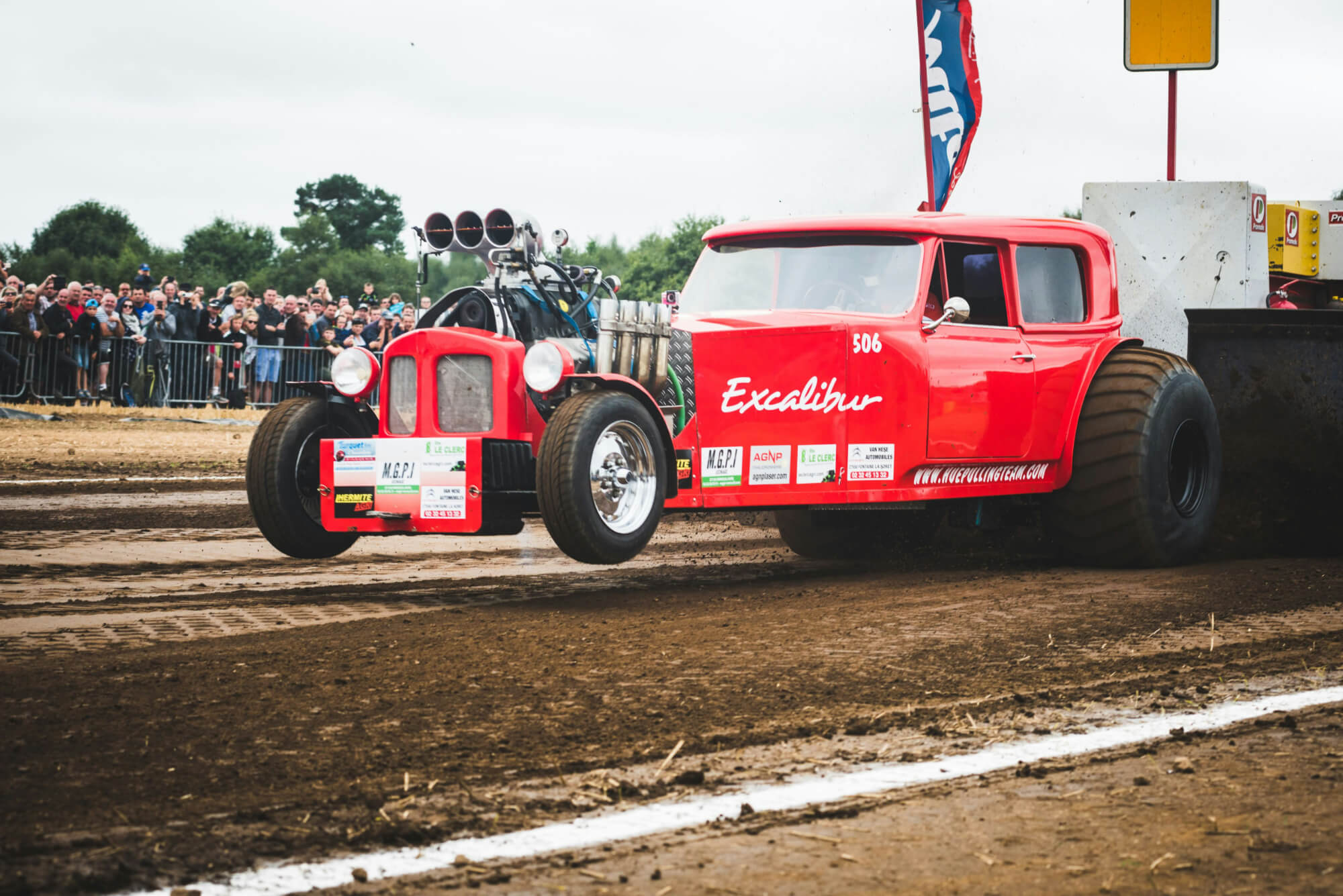
Walk through the pits at any major tractor pull today and you’ll notice competitors spend as much time studying their tires as they do tuning their engines. This wasn’t always the case. When organized pulling competitions began in the early 1960s, drivers showed up with whatever rubber came on their farm equipment. The tires existed to move tractors through fields, not to transfer 8,000 horsepower to a clay track in front of 15,000 spectators.
Those original farm tires featured deep, widely-spaced lugs designed to shed mud and prevent soil compaction. The tread patterns followed agricultural logic: minimize ground pressure, maximize flotation over soft earth, and provide enough bite for steady drawbar work. Pulling competitions exposed fundamental problems with this design. The lugs would flex and tear under lateral stress. The compound would overheat after a single 300-foot pass. The spacing that worked in wet fields created inconsistent hook-up on prepared tracks.
Manufacturers Enter the Sport
By the mid-1970s, tire manufacturers started to notice. Firestone and Goodyear both had agricultural divisions that received feedback from pulling teams. The initial response was incremental. They adjusted lug angles by a few degrees, reduced spacing slightly, and experimented with stiffer sidewalls. These changes helped, but the tires still carried compromises inherent to agricultural use. A farmer needs a tire that works in spring mud, summer dust, fall harvest, and winter storage. A puller needs maximum traction for fifteen seconds, then the tire goes back on the trailer.
The split between farm and pulling tire design accelerated through the 1980s. Goodyear introduced some of the first pulling-specific compounds that sacrificed longevity for grip. The rubber stayed softer at operating temperature, but a tire that might last five seasons on a combine would be ready for replacement after twenty pulls. Teams accepted this trade. The sport was maturing. Sponsors appeared. Purses grew. Nobody cared if their tires wore out fast when they were chasing points championships.
Engineering Under Load
Firestone took a different approach and focused on lug geometry. Their engineers studied how rubber deformed under load during the pull. They learned that as weight transferred to the rear tires during initial hook-up, the lugs didn’t just compress vertically — they twisted and flexed in multiple directions. This discovery led to asymmetric lug designs where the leading and trailing edges had different angles and thicknesses. The front edge would bite into the track surface while the rear edge would resist the rotational forces trying to tear the lug away from the carcass.
Track preparation became more standardized in the late 1980s, which created new opportunities for tire design. When every major event uses similar clay composition and moisture content, manufacturers can optimize for those specific conditions rather than building tires that work everywhere. The pro stock and super stock classes started running tires that performed best in a narrow window of track prep. Too dry and they’d spin. Too wet and they’d dig holes rather than propel the tractor forward. This specialization seemed limiting at first, but it actually expanded the field. Smaller teams could study track conditions and choose tire compounds that matched, gaining an edge over better-funded competitors who might have brought the wrong rubber to that particular event.
Modified Class Demands
Modified class pullers pushed tire development in unexpected directions through the 1990s. These machines make absurd power — often exceeding 5,000 horsepower from engines that started life in helicopters, boats, or industrial applications. The torque loads destroy conventional tire construction. Goodyear responded by adapting technology from their aircraft tire division. They started using aramid fiber belts under the tread, the same material that reinforces tires on landing gear. The belts prevented the tread from separating from the carcass under acceleration forces that can exceed 3g during the first twenty feet of a pull.
Cutting tires became standard practice around this time. Teams would take new tires and machine away rubber to reduce weight and alter the tread profile. A lighter tire has less rotational inertia, which helps the engine accelerate the drivetrain more quickly. The process also lets teams customize lug height and spacing for specific track conditions. Some pullers cut their tires down so far that only a thin layer of tread remains over the belts. This works until the tire temperature spikes and the reduced rubber mass can’t dissipate heat fast enough. Teams started bringing multiple sets of tires to events — some cut aggressive for tacky tracks, others left taller for slicker conditions.
Digital Development and Contact Patch Science
The physics of tire deformation became better understood as computer modeling improved in the early 2000s. Engineers could simulate how different compounds and construction methods would behave under load without building physical prototypes. This accelerated development cycles. A manufacturer could test dozens of variations digitally, then build only the most promising designs for track testing. The models revealed that tire performance depended heavily on air pressure, which seems obvious but the relationships were complex. Lower pressure increases the contact patch size, which should improve traction. But it also allows more lug flex, which can reduce traction if the flex becomes excessive. The optimal pressure varies by tire design, track condition, and the weight distribution of the specific tractor.
Two Design Philosophies Emerge
Firestone’s Puller 2000 tire represented the culmination of decades of pulling-specific development. The company built it from scratch for the sport rather than modifying an agricultural design. The tread pattern featured directional lugs that were essentially ramps angled to push down into the track surface while pulling the tractor forward. The compound used synthetic rubber blends that maintained consistent grip across a wide temperature range. The sidewalls incorporated multiple plies of different materials — some for strength, others for controlled flex. Professional teams could feel the difference immediately. The tires hooked harder on the starting line and maintained forward bite as the sled weight transferred and the track broke up under the rear end.
Goodyear answered with their Terra tire, which took a different philosophical approach. Instead of maximizing initial bite, they optimized for consistency across the entire 300-foot pass. The compound was slightly harder, which reduced peak grip but prevented the sudden loss of traction that would occur when softer tires overheated mid-pull. The lug design emphasized self-cleaning. Clay and dirt that packed between the lugs during the first half of a run would shed out as the tire flexed, maintaining bite in the final hundred feet when the sled reached maximum weight. Teams debated which approach was superior, but the real answer was that both worked depending on track conditions and pulling style.
Diesel Power Changes the Equation
The super stock diesel class, which emerged as one of the most competitive categories in the 2000s, created new tire challenges. These tractors make 2,000+ horsepower from turbocharged engines originally designed for highway trucks. The power delivery is different from modified class machines with their aviation engines. Diesels build boost gradually, so the tires need to manage a surge of torque that arrives a second or two after the green flag drops rather than immediately. This delayed hit could break traction even after a good launch if the tire wasn’t designed to handle it. Manufacturers developed compounds with specific dynamic properties — they’d be grippy enough for initial hook-up but would stiffen slightly under sustained load to prevent mid-pull wheel spin.
Safety and Regulation
Tire failures at high-level events are spectacular and dangerous. When a lug tears off at 40 mph, it becomes a projectile. When a sidewall lets go, the tractor can veer sharply toward the crowd. This forced sanctioning bodies to implement inspection requirements. Tires must be checked for cracks, separation, and worn belts before each pull. The rules also limit how much rubber can be cut away, preventing teams from creating dangerously thin tires in pursuit of weight savings. These regulations slowed the arms race toward ever more aggressive modifications, which was probably necessary given the power levels involved.
European Specialization
European tractor pulling took tire development in yet another direction because their tracks often feature different surfaces than American venues. Some European events use sand-clay mixtures that are looser and deeper than typical U.S. tracks. Tires that work in Ohio might dig useless holes in the Netherlands. European teams started experimenting with paddle-style tread patterns borrowed from sand drag racing. These designs sacrifice versatility but deliver superior performance on loose surfaces. The specialization became so extreme that top European pullers often bring three or four complete sets of tires to a championship event, swapping them based on how the track develops throughout the day.
The Hybrid Compromise
The rise of turbocharged farm tractors in the pro stock class during the 2010s created crossover demand. These are street-legal machines that farmers actually use for fieldwork during the week, then pull competitively on weekends. They need tires that can handle both applications. Manufacturers responded with hybrid designs that lean toward pulling performance but retain enough versatility for farm use. The compounds are harder than pure competition rubber but softer than standard agricultural tires. The lug patterns are more aggressive than farm duty requires but less specialized than what modified class machines run. These compromises work well enough that many regional-level pullers run them exclusively, accepting slightly less ultimate grip in exchange for not having to swap tires between field and track.
Partnership and Prototype Testing
Modern tire development happens through partnerships between manufacturers and top pulling teams. Firestone and Goodyear both maintain relationships with championship-level competitors who test prototypes and provide detailed feedback. This isn’t charit — the manufacturers need real-world data under competition conditions to validate their engineering. The teams get access to cutting-edge tire technology before it reaches the broader market. The arrangement works because both parties have aligned interests. A manufacturer wants their tires on winning tractors for the marketing value. Teams want every advantage they can find in a sport where a few feet can separate first from fifth place.
The Economics of Competition Rubber
The cost of competition tires has grown accordingly. A set of four modified class tires can exceed $15,000, and they might last twenty pulls before the tread is too worn or damaged to be competitive. Pro stock and super stock tires are somewhat more affordable but still represent substantial investments that regional teams struggle to justify. This economic reality has created a robust market for used pulling tires. A set that’s no longer competitive at the national level might have plenty of life left for regional events where the competition is less intense. Teams buy worn tires from championship pullers, run them for a season or two, then sell them again to sportsman class competitors. The tires eventually end up on practice tractors or decorating the yards of pulling enthusiasts.
Managing the Operating Window
Temperature management has become a focus area as tire compounds have evolved. The rubber needs to operate in a specific temperature window to deliver peak grip. Too cold and it stays hard and slippery. Too hot and it begins to tear and chunk out. Teams use infrared thermometers to check tire temperatures after each run. They’ll adjust air pressure for the next pull based on what the readings showed. If the tires ran too hot, they might increase pressure slightly to reduce flex and heat buildup. If they stayed too cool, they might decrease pressure to increase deflection and generate more heat through friction. The adjustments are small — maybe one or two pounds of pressure — but they matter at the top levels of competition.
Tire growth during a pull creates another variable to manage. Centrifugal force causes the tire to expand as rotational speed increases. The diameter can grow by several inches on a modified class tractor hitting 50+ mph at the end of a full pull. This growth effectively changes the final drive ratio, which affects how much torque reaches the track surface. Some teams account for this by building their gear sets with the expanded tire diameter in mind. Others adjust tire pressure to control growth—higher pressure resists expansion but reduces contact patch size. There’s no single correct answer. Each team develops their own approach based on their specific tractor, track conditions, and pulling style.
Where Rubber Meets Ground
Looking at tires from the current decade, the differences from agricultural rubber are obvious. The compounds are specialized enough that they’re nearly useless for anything except pulling. The construction is overbuilt in some areas and minimal in others based purely on the demands of competition. The pricing reflects the small production volumes and specialized engineering that goes into each design. Yet farmers still pull their tractors competitively, and pulling events still happen at county fairs and agricultural shows. The connection to farming remains even as the equipment diverges.
The tire sits at the intersection of all other performance factors. The most powerful engine means nothing if the tires can’t transfer that power to the ground. Perfect weight distribution fails if the rubber compound doesn’t match track conditions. Precise throttle control becomes irrelevant when a lug tears and the tractor veers offline. This is why serious pulling teams treat tire selection and setup with the same intensity they apply to engine tuning. The rubber is where theory meets dirt, where horsepower becomes forward motion, where competitions are won or lost before the green flag ever drops.
This material was prepared with technical insights provided by the experts at TractorEvolution.com.
